Moroccan cuisine and culinary traditions
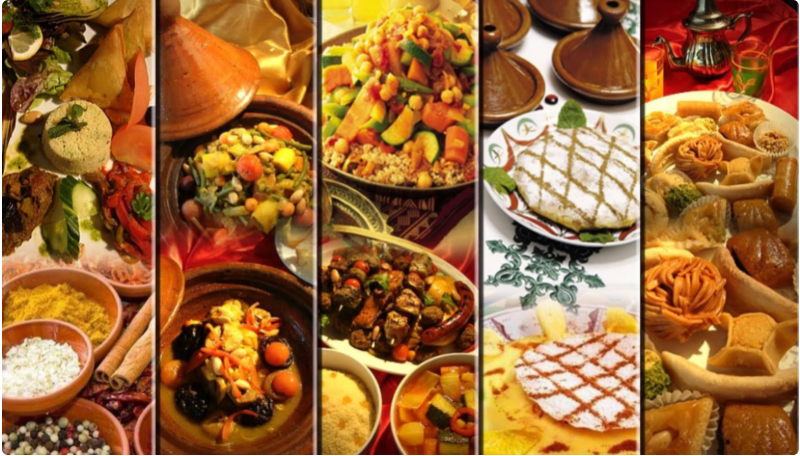
Moroccan cuisine is a unique blend of culinary traditions and customs, reflecting Morocco’s cultural and historical diversity. Influenced by agricultural practices, Moroccan cuisine is rich in fresh, local ingredients. It is famous for dishes such as couscous, tagine, pastilla, and mint tea, all with their own unique history and traditions.
The importance of Moroccan cuisine
local ingredients
Moroccan cuisine relies heavily on local ingredients, such as grains, vegetables, fruits, and meat, making it healthy and balanced.
Spices and herbs :
Spices and herbs are used extensively in Moroccan cuisine, adding unique flavors to dishes.
Food rituals :
In Morocco, people have their own rituals, such as using their hands to eat couscous and drinking mint tea after meals .
Cultural heritage :
Moroccan cuisine is part of Morocco’s cultural heritage, reflecting its history and traditions.
Traditional dishes :
Traditional dishes such as couscous, tagine and bastilla are an integral part of Moroccan culture.
Examples of traditional dishes and cooking methods
Couscous
Moroccan couscous is a traditional dish of the same size, a staple of Moroccan cuisine. Characterized by small grains of the same color throughout the day, couscous pairs well with legumes and chicken, and is served with broth.
A tagine
Moroccan tagine is a traditional dish popular in Morocco and North Africa. It is prepared in a special terracotta pot with a flat bottom and a conical, domed lid. Made with meat or chicken and various vegetables, tagine is cooked slowly over low heat, giving it a distinctive flavor.
The Bastille
Moroccan bastilla is a traditional Moroccan pastry, also called “bastilla” in French. It consists of thin sheets of pastilla (or filo) filled with chicken, pigeon, turkey, and sometimes even seafood. It is seasoned with parsley, cilantro, hard-boiled eggs, almonds, and cinnamon, making it a unique combination of sweet and savory.
Mint tea
Moroccan mint tea isn’t just a drink; it’s a symbol of Moroccan hospitality and culture. Its refreshing and captivating flavor combines green tea and fresh mint leaves.
Moroccan sweets
Moroccan sweets are a variety of desserts prepared and consumed in Morocco, characterized by unique flavors and local ingredients. There are many types, such as chebakia, qa’ab el ghazal, ghriba, and bchenikha, each with its own history and preparation method.
Marrakech Tangier
Tangia, or tanjia maarakchia, is a traditional Moroccan dish originating from Marrakech and is the city’s signature dish. Traditionally, it is prepared by men, particularly merchants and traders in the souks, during their lunch break. The dish is characterized by its slow, even cooking in a clay pot, the tanjia.
Moroccan Harira
Harira is a traditional Moroccan dish consisting of a delicious soup or stew made with a variety of ingredients such as lentils, chickpeas, tomatoes, aromatic vegetables, and rice or noodles. Harira is a staple dish during Ramadan, served at the iftar table.
The role of cuisine in Moroccan culture:
An expression of identity :
Moroccan cuisine is part of Moroccan identity and expresses their history and culture.
Communication sociale :
Cooking plays an important role in social communication, as people gather around the dining table and exchange ideas and experiences.
Raising Generations :
Traditional dishes help raise new generations and introduce them to the history and traditions of their society.
Holidays and occasions :
Culinary dishes are an integral part of various celebrations and occasions in Morocco, such as weddings and
religious occasions.
in conclusion :
Moroccan cuisine is not just a collection of dishes; it is an integral part of Moroccan culture, reflecting its history and traditions and uniting members of society.